Case study · 6 min read
To AI or Not to AI? Generative AI for Internal Auditors at the IIA Qatar National Conference
Surendra Pandar's keynote and AI sessions at the IIA Qatar (Doha Chapter) 8th National Conference on Internal Auditing on 9 February 2026: the pros and cons of AI for audit, where it is safe to use, and where auditors should not rely on it.
By Surendra Pandar, AI Trainer ·
- Organisation
- The Institute of Internal Auditors, Doha Chapter (IIA Qatar)
- Event
- 8th National Conference on Internal Auditing, Doha
- Date
- 9 February 2026
- Audience
- Internal auditors, audit leaders and founders
- Format
- In person: conference keynote and AI sessions
- Keynote
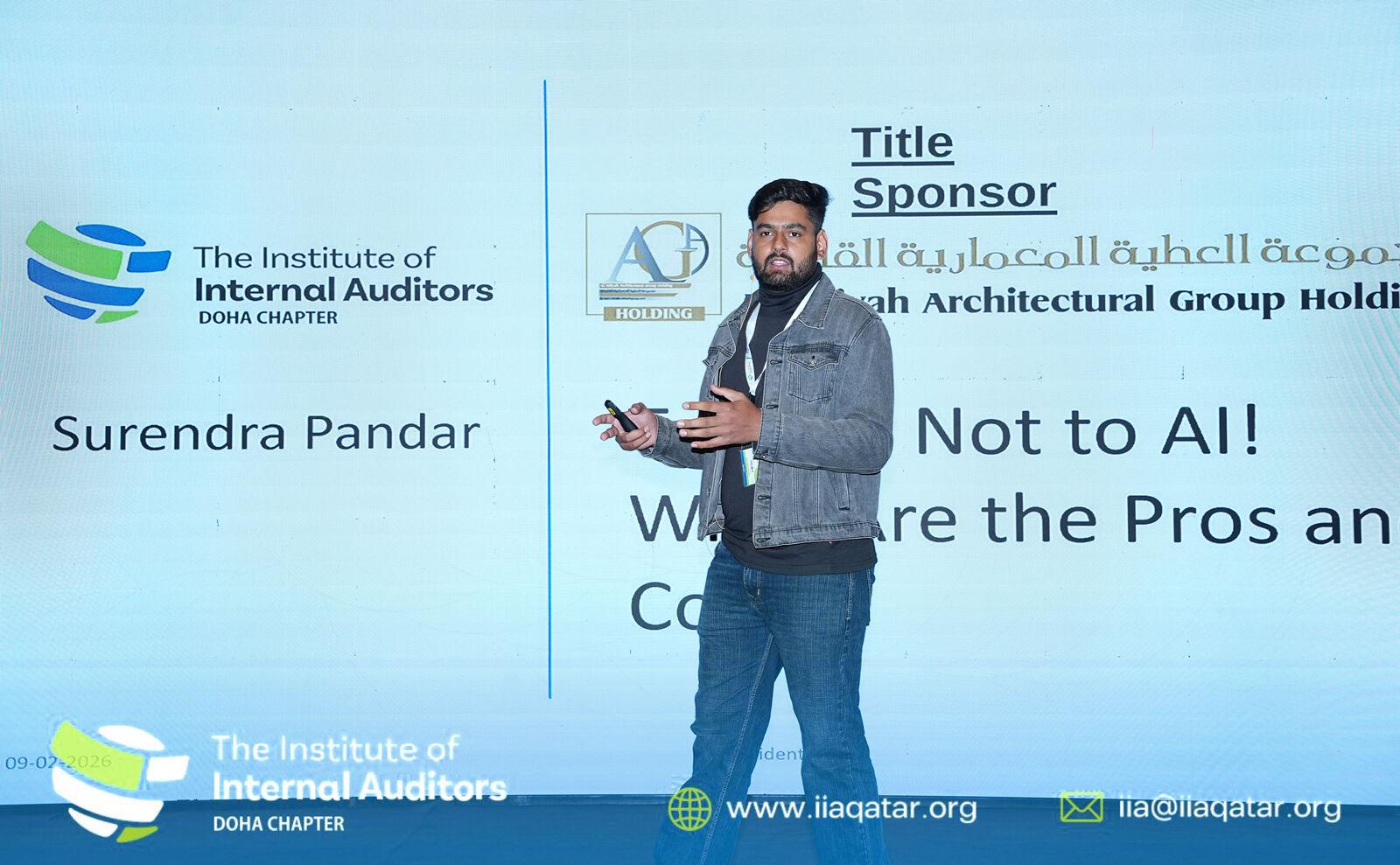
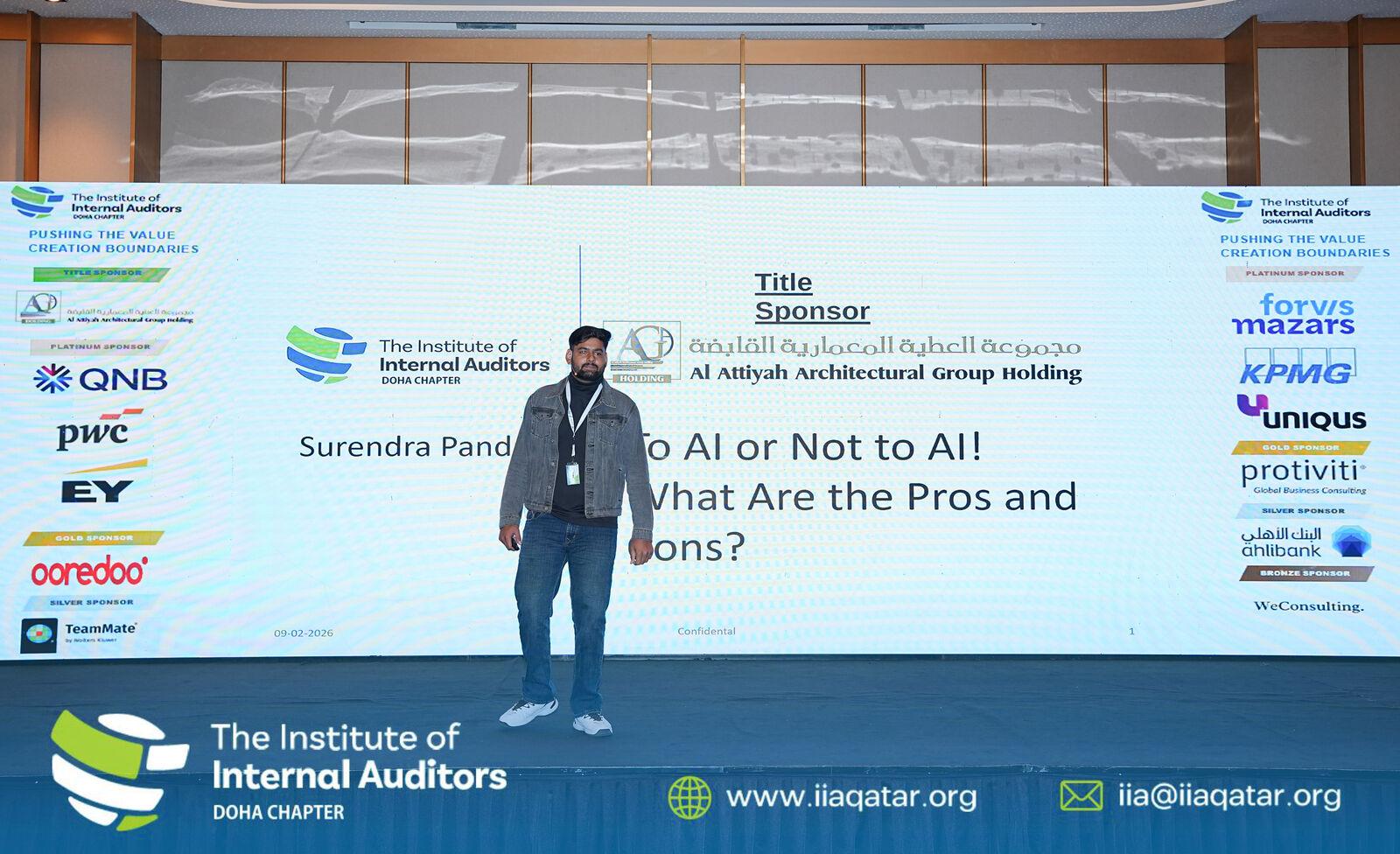
- To AI or Not to AI! What Are the Pros and Cons?
In short
- An invited keynote at the IIA Qatar 8th National Conference on Internal Auditing in Doha, titled "To AI or Not to AI! What Are the Pros and Cons?", followed by sessions on responsible AI use and organisational controls.
- The talk did not sell AI. It started from the question auditors actually ask, "Is AI real, or is it just hype?", and answered it with a map of where AI is safe to use and where it is not.
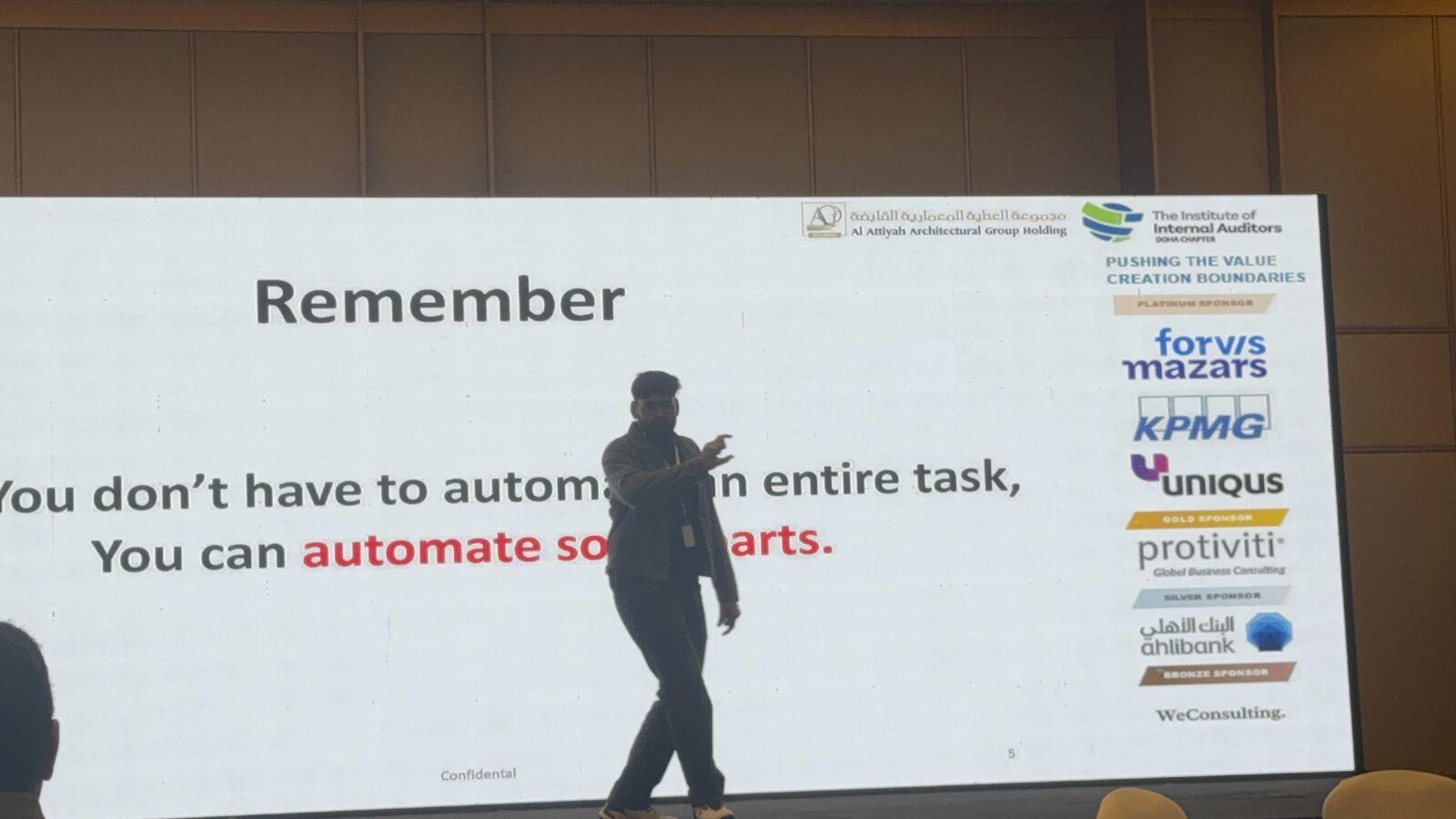
- The most practical idea from the stage: you don't have to automate an entire task. You can automate some parts, and keep the parts that need judgement and evidence with people.
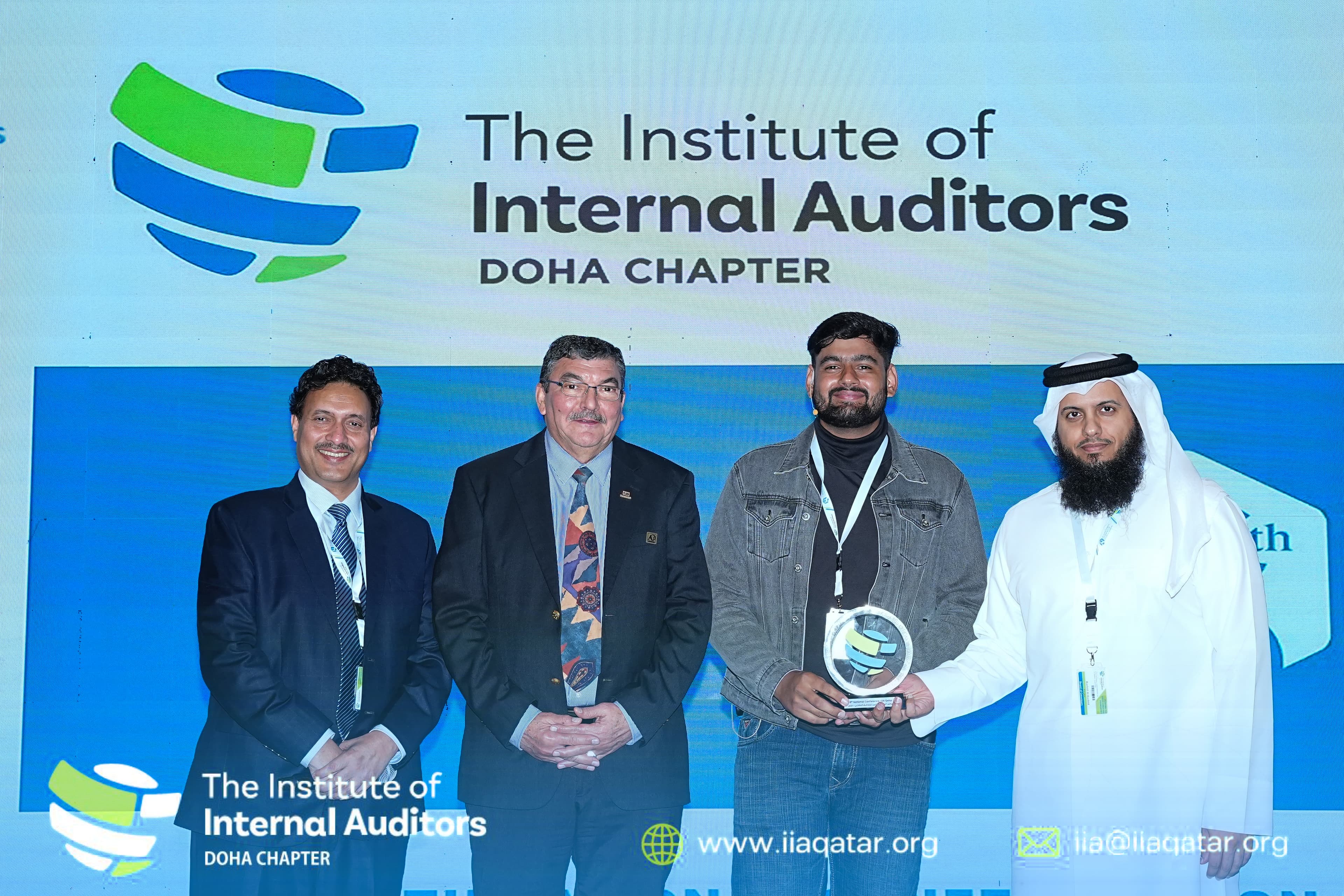
- Surendra was honoured on stage by the Doha Chapter for the session.
The setting
The Institute of Internal Auditors, Doha Chapter, runs a national conference for the internal audit profession in Qatar. The 8th edition took place in Doha on 9 February 2026, under the banner "Pushing the Value Creation Boundaries". The audience was internal auditors, audit leaders and founders.
Surendra Pandar was invited as an international speaker to talk about AI adoption and governance. It was a conference keynote, not a classroom workshop, so this page is shorter than the full-day case studies on this site. It is built only from what we have: the photos from the day, the slides visible in them, and what one participant said afterwards.
The challenge: auditors are paid to doubt
Internal auditors work where accuracy matters most. A confident answer that turns out to be wrong is not a small error in audit; it can end up in a report that a board relies on. That is why many people in the room were wary of generative AI. The tools are known to produce confident but wrong answers, which are usually called hallucinations.
So the useful question for this audience was never "should we use AI?" It was "where is it safe to use, and how do we control it?" A talk that only showed impressive demos would have made the doubt stronger, not weaker.
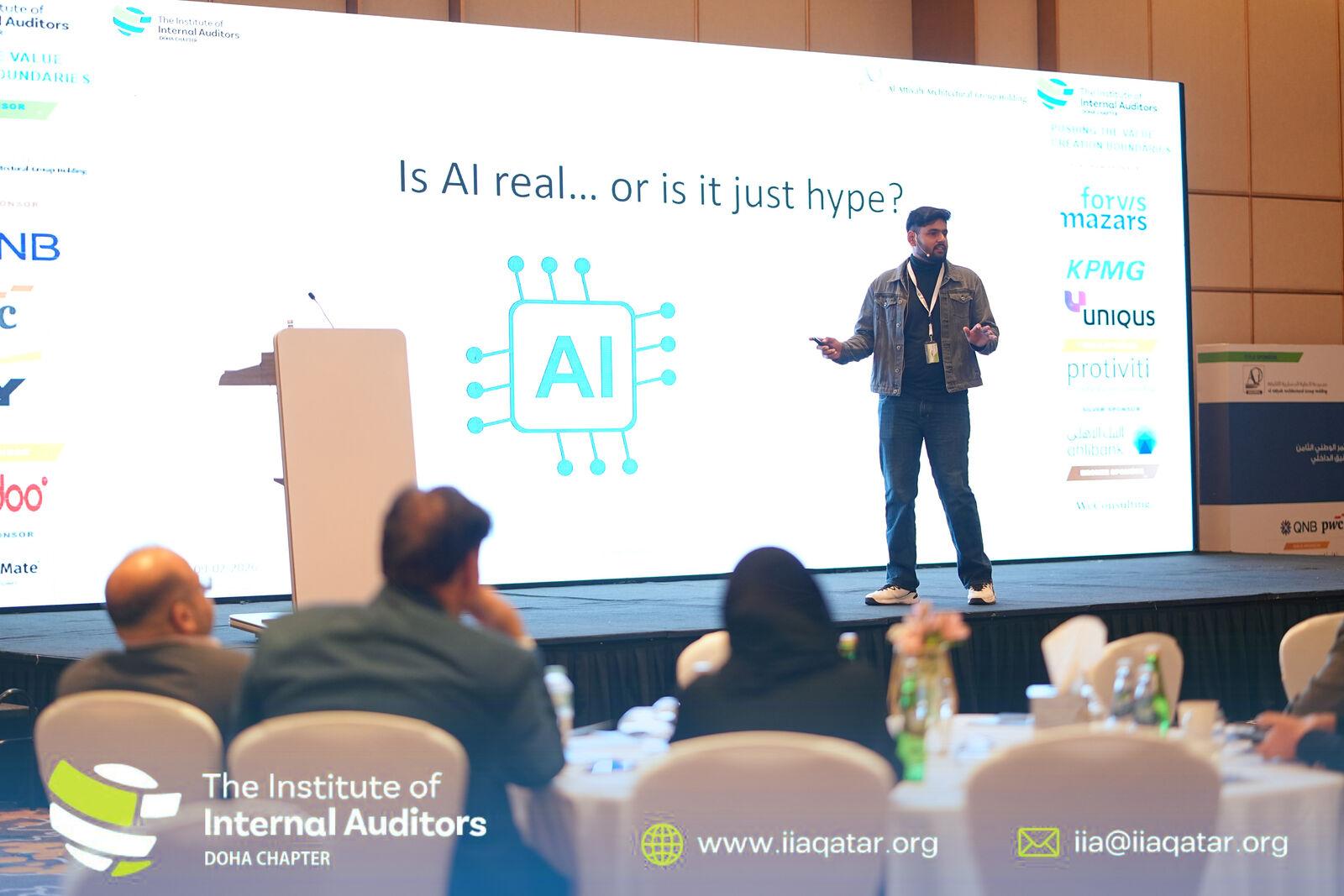
Is AI real, or is it just hype?
The keynote opened with the question the audience was already asking. Instead of claiming AI can do everything, it laid out both sides: what generative AI does well today, and what it still gets wrong. That framing, pros and cons side by side, was the title of the talk and the thread through it.
What the sessions covered
Along with the keynote, Surendra ran sessions on using AI for business performance and on responsible AI implementation. Across them, the content was built around risk and control:
- Where generative AI is low-risk and high-value in audit work
- Where AI should not be trusted without verification
- Simple frameworks to check AI output before relying on it
- Practical prompts for drafting, summarising and structuring audit documents
- Practical adoption strategies, and the organisational controls that should sit around them
The idea that stuck: automate some parts, not the whole task
One slide carried the most practical message of the day: "Remember: you don't have to automate an entire task. You can automate some parts."
For auditors this changes the question. An audit task is not one thing. It is a chain of steps, and only some of those steps need professional judgement or evidence that a person has checked. The rest is reading, sorting, summarising and first drafts. AI can take on those parts while the auditor keeps the judgement.
Applying it in an audit team
This is how Surendra suggests an audit team puts the two ideas from the keynote to work: be honest about pros and cons, and automate parts rather than whole tasks. It is guidance for readers, not a record of what was shown on the day.
| Step in an audit task | Can AI help? | What stays with the auditor |
|---|---|---|
| Reading policies, procedures and prior reports | Yes: summarise, list key controls, compare versions | Confirming the summary against the source |
| Planning memo and risk areas | Yes: a first draft from your notes | Deciding which risks matter and why |
| Walkthrough and interview notes | Yes: tidy notes into a structured record | What was actually seen and said |
| Testing controls and sampling | Only with care: help structuring the work | The evidence, the sample, the conclusion |
| Findings and the audit report | Yes: clearer wording and structure | Every fact, figure and rating |
The rule is simple: AI may draft, sort and summarise, and a person checks anything that ends up as evidence or in a finding. Confidential client data stays out of public AI tools unless your organisation has approved the tool for that data.
The result
Christian Adonis, Internal Audit Manager at a GCC energy company, said the frameworks helped him see exactly where he can use AI without risk, and where he should not rely on it. That is the outcome the session aimed for: confident, bounded use instead of either blind trust or blanket avoidance.
At the conference, Surendra was also honoured on stage by the Doha Chapter for the session. We have no measured time or cost savings from this event, and this page does not claim any.
Takeaway for other organisations
In audit, finance, legal and compliance teams, the first lesson is not a tool. It is a map of safe and unsafe uses. Once that map exists and people know which parts of a task AI may touch, adoption becomes faster and safer.
If your audit, risk or finance team wants the same kind of session, built around your own controls and documents, get in touch through the contact page.
“I always hesitated with AI because of hallucinations. Surendra's frameworks helped me see exactly where I can use AI without risk — and where I shouldn't rely on it.”
Frequently asked questions
Is generative AI safe for internal audit work?
It can be used safely for drafting, summarising and structuring when the output is verified by a person. The session taught a simple way to decide where AI is low-risk and where it is not.
What was the keynote at the IIA Qatar conference about?
The keynote, "To AI or Not to AI! What Are the Pros and Cons?", was given at the IIA Doha Chapter's 8th National Conference on Internal Auditing on 9 February 2026. It weighed the real benefits of generative AI against its risks for audit and governance work.
Should auditors automate whole audit tasks with AI?
No. The advice from the talk was to automate parts of a task, such as reading, summarising and first drafts, and keep judgement, evidence and conclusions with the auditor.
Can Surendra Pandar run a similar session for our audit or finance team?
Yes. Sessions are built around your own documents, controls and tools, in person or online. Use the contact page to start.